

November 4, 2026
Transforming Your Smile: Steps to a Successful Smile Makeover
Cosmetic Dentistry


November 4, 2026
Cosmetic Dentistry

Quick answer: A successful smile makeover follows a clear order: define your goals, get your teeth and gums healthy, preview the design, straighten or whiten first if needed, then place veneers, bonding or crowns, and finish with refinements and maintenance. Skipping or reordering steps is where most disappointing results start.
He had saved a photo on his phone for two years.
It was a smile he liked. Not a celebrity, just someone in an ad. Bright, even, nothing fake about it.
When he finally came in, the first thing he asked was, “How many veneers would I need to look like that?”
It was a fair question. It just was not the first question.
The simple answer is… a smile makeover is a combination of treatments that changes the color, shape, size or position of your teeth to give you the smile you want.
The more honest answer is… the treatments themselves are only half of it. The order you do them in, and the planning that happens before anyone touches a tooth, decide whether the result looks natural and lasts.
Every plan is different, but most successful makeovers move through the same six stages.
StepWhat happensWhy it matters1. Define your goalsYou explain what bothers you and what you want to seeGives the plan a clear target2. Get healthy firstDecay, gum disease and bite problems are treatedCosmetic work needs a stable foundation3. Preview the designPhotos, scans and a trial smileYou see the result before committing4. Move and brightenAligners and whitening, if neededSets tooth position and shade before restorations5. Restore and reshapeVeneers, bonding, crowns or implantsCreates the final shape and color6. Refine and maintainBite checks, polish and a care planProtects your investment
Let’s walk through each one.
This sounds obvious. It is also the step people rush the most.
“I want a nicer smile” could mean whiter teeth, a straighter line, closing a gap, fixing one chipped tooth, or showing less gum when you laugh.
Research on how people judge their own smiles found that tooth size, how much of the teeth show and the position of the upper lip shaped how attractive people felt their smile was. Tooth color and how much gum showed mattered most for whether they were satisfied with it (Van der Geld et al., 2007).
In other words, what bothers you is personal, and the plan should start there.
Bring photos of smiles you like and photos of your own smile you dislike. Both help.
Cosmetic dentistry sits on top of your natural teeth and gums. If that foundation is unstable, the result will not last.
That is why existing decay or gum disease is treated before cosmetic work begins. A cavity under a new veneer, or inflamed gums around a new crown, can undo months of work.
This step may also include checking your bite. Teeth that hit too hard in one spot, or a habit of grinding, can chip new restorations.
Old fillings or crowns in the smile zone are part of this review too. A dark filling edge or an older crown that no longer matches can stand out once the teeth around it are brightened, so it helps to decide early whether those will be replaced as part of the plan.
It is not the exciting part of a makeover. It is the part that makes everything else hold up.
Often, yes. This is one of the biggest changes in cosmetic dentistry over the past decade.
Digital smile design uses photos, video and scans of your face and teeth to plan the new smile around your lips and facial features, not just the teeth in isolation. Researchers who developed this approach describe it as improving both planning and communication with patients (Coachman et al., 2017).
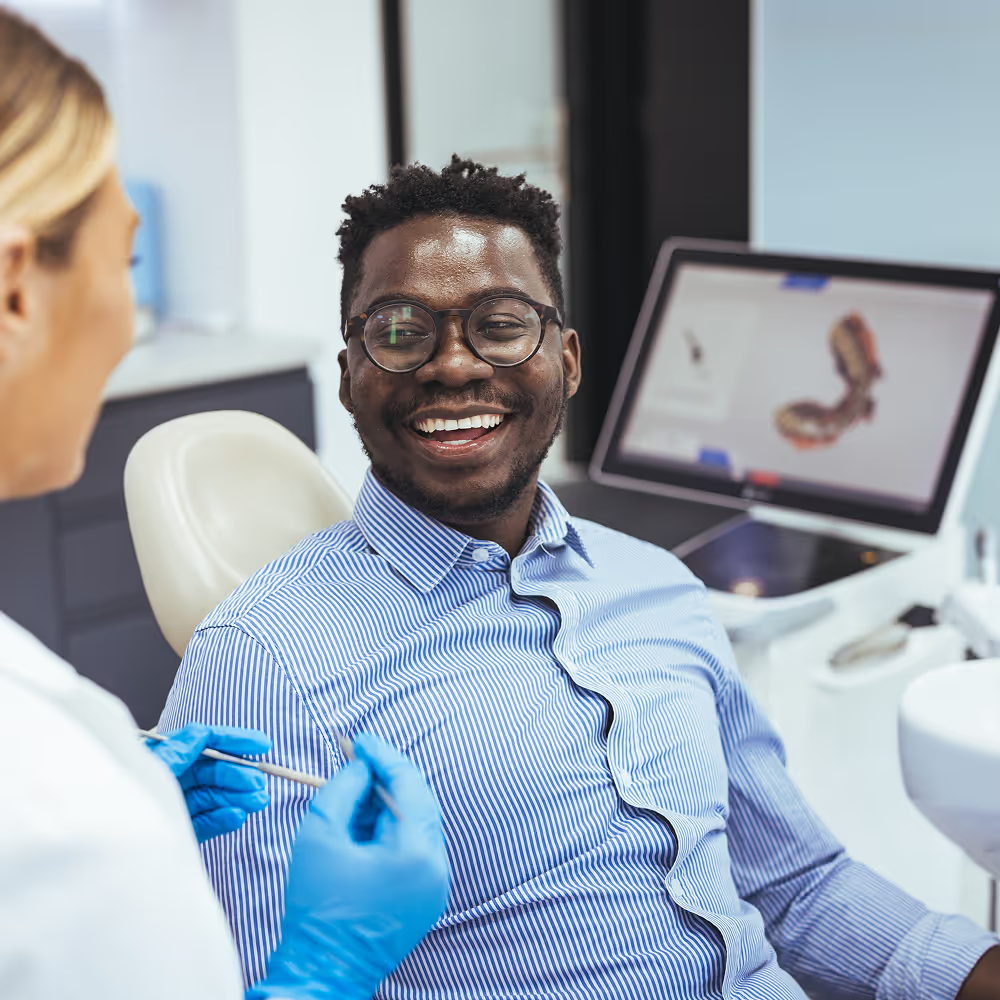
Many plans also include a trial smile, sometimes called a mock-up. Tooth-colored material is placed over your teeth temporarily so you can see and feel the proposed shape. In a 12-year study of porcelain veneers planned with this kind of trial restoration, more than 80% of tooth preparations stayed within the enamel layer (Gurel et al., 2012).
That matters because the less tooth structure removed, the more conservative the treatment.
In many cases, yes. This is where sequence makes the biggest difference.
If teeth are crowded or tilted, veneers alone may require more reshaping to make them look straight. Moving teeth into better position first with clear aligners can mean fewer veneers, thinner veneers, or none at all.
Porcelain veneers and crowns are made in a fixed shade. Whitening gel does not change their color later. So if you want your natural teeth brighter, professional teeth whitening usually comes before the veneer or crown shade is chosen.
Whitening can cause temporary tooth sensitivity. A review of clinical trials found that adding desensitizing agents to the bleaching gel did not reduce the risk of sensitivity (Rezende et al., 2019). If your teeth are already sensitive, our article on what to do about hypersensitive teeth explains what helps.
The right order can save you money and tooth structure.
Once the foundation, position and shade are set, the visible changes happen. The most common options look like this:
TreatmentBest forTypical range at our officeTypical lifespanProfessional whiteningOverall brightness of natural teeth$300 to $8001 to 3 yearsBondingSmall chips, gaps and shape changesVaries by tooth5 to 10 yearsVeneersColor, shape and size of front teeth$900 to $2,500 per tooth10 to 15 years or longerCrownsTeeth that are heavily filled, cracked or weakVariesVaries with material and careImplantsMissing teethSee implant pagesImplant post can last many years
Price ranges and lifespans above come from our smile makeover page and depend on the tooth, the material and how you care for it.
A review of porcelain and glass-ceramic veneers found an estimated survival rate of 89% over a median of 9 years. The most common problems were chipping or fracture (4%), debonding (2%) and staining at the edges (2%) (Morimoto et al., 2016). When preparations stayed in enamel, the 12-year study mentioned above reported no failures from debonding or leakage (Gurel et al., 2012).

Our veneers and Lumineers page explains the differences between options. If you are leaning toward veneers, our article on getting veneers in Clifton answers the most common day-to-day questions.
Bonding uses tooth-colored composite resin and usually needs little or no drilling. A review of front-tooth composite restorations found yearly failure rates ranging from 0% to 4.1%, with survival rates varying widely between studies (Demarco et al., 2015). It is a great conservative choice, but it may need touch-ups sooner than porcelain.
When a tooth is badly broken or missing, cosmetic options alone are not enough. Some makeovers combine crowns or implants with veneers and whitening. Our earlier article on combining cosmetics and implants covers that type of plan.
The final visit is not the end. Small refinements, like polishing an edge or adjusting the bite, can make the result feel completely natural.
After that, maintenance protects the investment:
It depends on what is in the plan.
Some changes, like whitening or bonding a few teeth, can be finished in one or two visits. A makeover that includes aligners, several veneers, crowns or implants usually takes several weeks to several months.
A rough way to think about it:
If you have a wedding, a new job or another date in mind, mention it at your first visit. It is much easier to plan backward from a deadline than to rush the final steps.
Many people start by picking a treatment. “I want veneers.” “I want whitening.”
A successful makeover starts the other way around. It starts with the smile you want, then works backward to the least invasive way to get there.
Sometimes that means fewer veneers than you expected. Sometimes it means aligners first. Occasionally, it means more work than you hoped, because a foundation problem has to be fixed.
The treatment should follow the plan, not the other way around.
For patients in Clifton and nearby towns, our smile makeover consultations usually cover:

You can see more examples in our smile gallery, and learn about the full range of options on our smile makeover page.
Cost depends entirely on which treatments are included. On our smile makeover page, comprehensive makeovers range from about $5,000 to $25,000 or more.
Purely cosmetic treatment is usually not covered by dental insurance, but restorative parts of the plan, such as a crown on a cracked tooth, may qualify for benefits. We provide a personalized estimate after your consultation and offer financing through Cherry.
If your smile goals also involve replacing many missing or failing teeth, our article on facts and myths about full mouth reconstruction is a helpful next read.
Ready to start with step one? Contact Marvel Dental in Clifton, NJ to schedule a smile makeover consultation, and bring the photos you have been saving.
Experience dental care that puts your comfort, confidence, and health first. We're here to make dental visits feel like your home away from home.
The team at Marvel Dental is ready to assist with your questions, coordinate your appointment, and guide you through a comfortable, well-organized visit from start to finish.